



Hilda glows as she describes her son Lucio as “his pure, genuine self.” He loves to laugh and has a special bond with animals, including the family goat. Lucio, who is autistic and has ADHD, communicates mostly without speech, but Hilda says he picks up new phrases from favorite movies and tries them out on people. When he’s feeling overwhelmed, a line from The Minions often makes the rounds: “You, get out of my sight!”
With the right supports, including skills-based behavior therapy (SBT) written into his IEP, Lucio can stay regulated and loves school. He especially enjoys riding the bus and seeing his friends. But in early 2025 when Lucio was eight, something changed. He started running from class or ‘eloping’ and becoming more aggressive. In April, watching her son’s struggles, Hilda checked in with the school to ask whether anything had changed with his supports. What she learned stunned her: Lucio’s SBT had been halted, and no one had told her. “That clicks,” she thought. The timing lined up with Lucio’s change in behavior. Then a harder question hit her:
“If you’ve stopped this without notifying me, what else are you not telling me?”
Hilda called an IEP meeting to get answers. She pointed to where SBT was listed in his IEP and asked why it had stopped. By then, only three weeks remained in the school year. The district agreed to reinstate SBT and provide it through Extended School Year (ESY), but those services never materialized.
Hilda’s county case manager then directed her to FACT. That summer, she joined our three-part IEP webinar series. She learned about her parental rights, including that a school can’t simply stop services written into an IEP without Prior Written Notice. She also got tips like pausing to acknowledge her emotion and frustrations so she could set them aside in.
“I’m there to serve a purpose, and the only purpose is for my child's needs,” Hilda recalls.
When the new school year started again without SBT, she called FACT and spoke to Karen, one of our Support Specialists. “I’m going to get emotional now,” Hilda shared, “because I just felt like I needed to give up.” But Karen, Hilda shared, “had all the right words. She made me think that I wasn’t crazy or asking for special treatment for my son.” Karen saw that Hilda was only asking for “all the things that are already in his IEP - they just need to continue to implement them.”
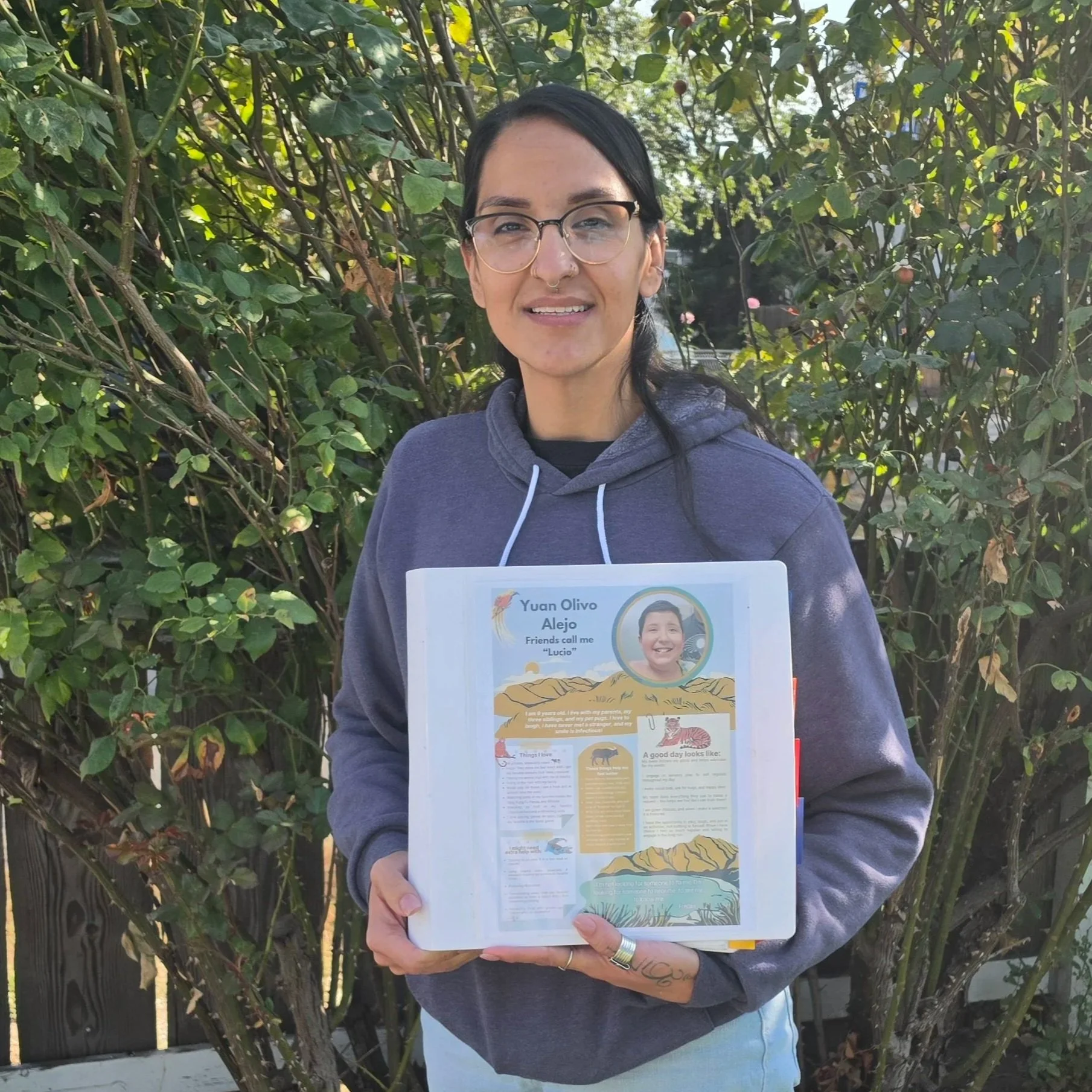
Karen’s words gave Hilda new strength and new energy. She sent Karen every document she had, and Karen supported her in mapping out next steps. She read and absorbed the resources Karen sent. And, at the next IEP meeting, she handed every team member her parent input and a one-page profile of her son, a snapshot of who Lucio is and what helps him thrive. When staff questioned if she had made these on her own, it stung. But this time, Hilda was prepared:
“I’m going to prove that with the right resources and the right tools, I'm powerful. I will advocate for my kid. Period.”
Today, Hilda walks into every IEP meeting with what she calls her “Bible.” It’s a heavy-duty three-inch binder with her son’s one-page profile on the cover and her parental rights on the very first page. Those are the same papers she once folded in half and threw away. “We trusted the school system blindly,” she says. Now she shows up calm, prepared, and ready to partner, knowing that “we have to follow the right steps to get to where we need to be.”
Hilda’s perseverance paid off. Lucio’s SBT was finally restored after almost a year without it. But Hilda’s advocacy doesn’t end there. Armed with newfound confidence, she and another parent spoke to the school board about how students in Lucio’s classroom were being left behind, with six other parents standing behind in solidarity. Shortly after, the principal with whom she had “bumped heads” stopped her one morning to ask if he could nominate her to the school board. He told her she had shown “how great of an advocate you are for your kid,” and for every student in that classroom.
When Hilda interviewed with the school board, she told them that she is a first-generation Mexican American who wants other kids to have the opportunity “to not be afraid.” In June, she was appointed. Now, in addition to the voice she brings in her personal advocacy as a parent, she helps to make decisions that shape the experiences of all kids and all families in the district. And Hilda is leaning even further into that work in her new role as a Community Engagement Specialist for FACT. She wants every parent facing hard things to know they’re not in it alone.
“If my story can help somebody else,” she says, “I think I’ve served my purpose in life.”
This year, your gift helps make sure that when the next parent reaches out, worn down and ready to give up, someone at FACT is there to say: “No, you don’t. Here’s how we can help.”
